What Do Valais Blacknose Sheep Eat
A Feeding Guide for Hay, Grain, and Minerals
Note: This guide focuses on feeding Valais Blacknose sheep in a barn or dry-lot setup — without year-round pasture access. Pasture management is its own topic we’ll cover in a future post.
Overview
Valais Blacknose sheep are hardy, double-purpose animals originally from the Swiss Alps, where forage was seasonal and supplemental feeding was simply a way of life. That heritage shapes how they eat today.
At their core, these sheep thrive on high-quality hay, carefully rationed grain, free-choice minerals, and fresh water. Get those four pillars right, and your flock will be healthy, well-muscled, and content.
The short answer to what Valais Blacknose sheep eat: primarily hay — and lots of it. Grain plays a supporting role for specific animals at specific life stages. Minerals round out the nutritional picture. And treats? Yes, there are a few they love. Let’s break it all down.
Hay: The Foundation of Every Feeding
Hay is the cornerstone of a Valais Blacknose diet, especially when pasture isn’t in the picture. The type and quality of hay you offer matters more than most first-time sheep owners expect. Not all hay is created equal — and understanding the difference between first and second cut can help you feed smarter, reduce waste, and support your flock’s digestive health.
First Cut vs. Second Cut: What’s the Difference?
Hay is typically harvested multiple times per season from the same field. The first cutting of the year — called first cut — happens after the grass or legumes have had the longest time to grow. This results in hay that tends to be coarser, stemmy, and somewhat lower in protein compared to later cuttings. Second cut hay is harvested later in the season when regrowth is finer, leafier, and nutritionally richer.
Both cuts have a place in your feeding program. At Wool & Wonder Farm, we’ve noticed our Valais Blacknose sheep are pickier with first cut hay — they tend to root through it, pulling out the leafier bits and leaving the stems behind. This can create some waste, but it’s not entirely a bad thing. The coarser fiber in first cut hay is genuinely helpful for digestive health. That roughage promotes proper rumen function and, practically speaking, tends to produce better-formed manure. If you’re seeing loose stools in your flock, switching to or increasing the proportion of first cut hay can sometimes make a meaningful difference.
Second cut hay, by contrast, is lush and rich. Our sheep love it — they dig in enthusiastically and waste very little. However, because it’s higher in protein and energy, it can cause digestive upset in animals that aren’t conditioned to it, and it may contribute to softer stool if fed in large quantities. Second cut is ideal during periods of higher nutritional demand: late pregnancy, early lactation, or for young lambs that need the extra calories to grow.
A practical approach for most flocks is to offer first cut as the bulk of daily hay intake and supplement with second cut for animals that need more nutrition. Mixing the two is also a common and effective strategy.
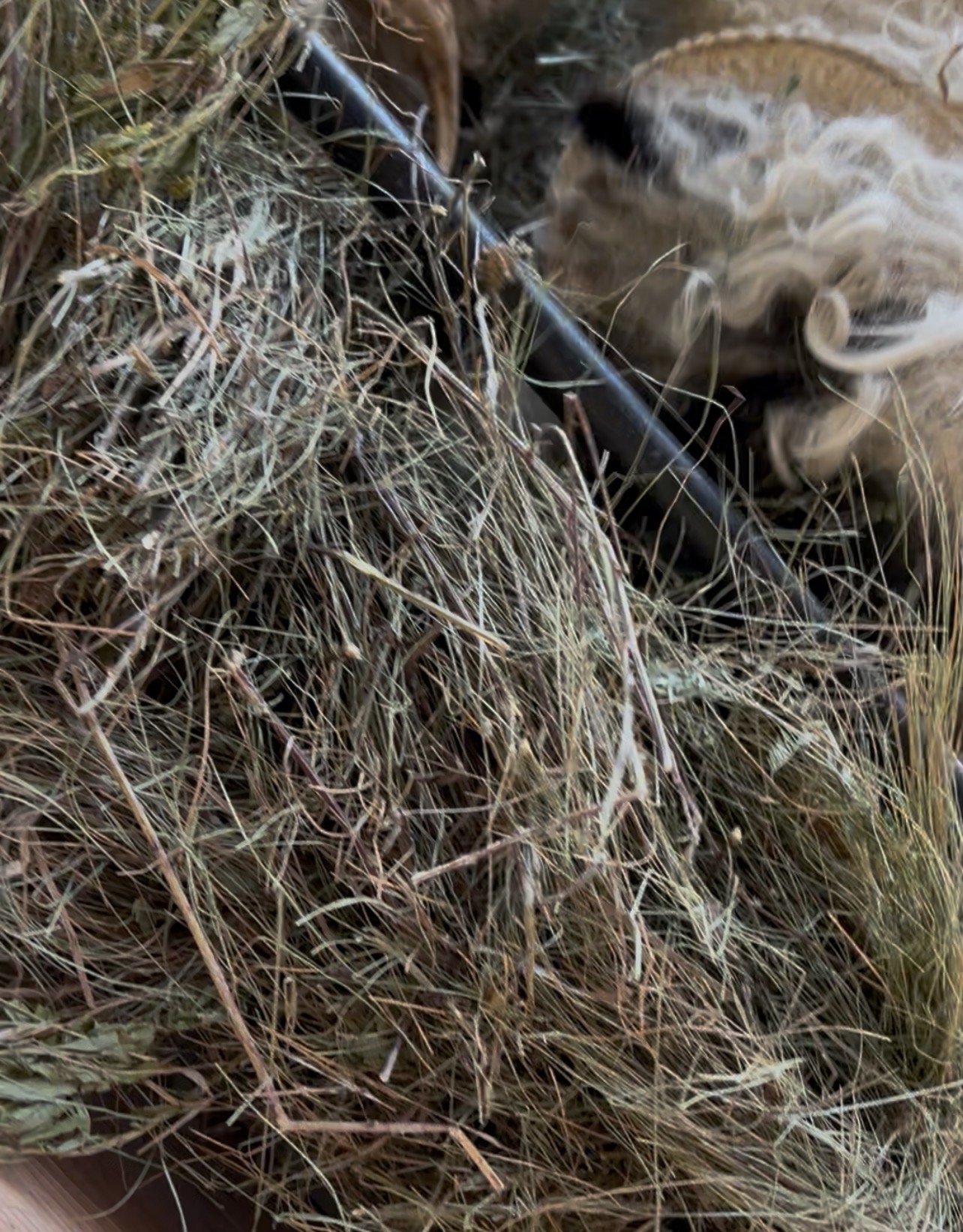
This is what first cut hay looks like.
Grain: A Tool, Not a Staple
One of the most important things to understand about feeding Valais Blacknose sheep is that grain is not a daily requirement for most animals. Sheep are ruminants designed to thrive on forage, and overfeeding grain can cause serious metabolic problems — including grain overload (acidosis) and urinary calculi in rams. Grain should be targeted, purposeful, and monitored carefully.
That said, three categories of animals in your flock genuinely benefit from supplemental grain:
Lambs Under One Year
Growing lambs have high energy and protein demands that hay alone often can’t meet, especially when they’re weaning or growing through their first winter. We start our Valais Blacknose lambs on grain early and continue feeding it until they reach approximately twelve months of age. A creep-feeding setup — where lambs can access grain that adults can’t reach — works well for managing intake across a mixed-age flock. Keep portions moderate and always ensure lambs have unlimited hay access alongside any grain.
Pregnant and Nursing Ewes
The last six weeks of pregnancy and the first weeks of nursing are the most nutritionally demanding periods of a ewe’s life. During late gestation, twin or triplet lambs are growing rapidly, putting enormous pressure on her body reserves. If she doesn’t receive adequate energy during this window, she’s at serious risk for pregnancy toxemia — a potentially fatal metabolic condition.
We will introduce grain supplementation for our pregnant ewes starting about six weeks before expected lambing and continue through the nursing period. The exact amount depends on body condition score and how many lambs she’s carrying, but the key principle is to increase grain slowly and watch her closely. Nursing ewes need the additional calories to produce milk — and Valais Blacknose ewes are surprisingly capable milk producers relative to their size.
Rams: Under One Year and During Breeding Season
Most of the time, adult rams do not need grain. Overfeeding grain to rams — particularly those who aren’t actively breeding — significantly increases the risk of urinary calculi, where mineral deposits form in the urinary tract. This condition is painful, dangerous, and sometimes fatal.
However, rams under one year old are still growing and benefit from the same grain supplementation as lambs. And once a mature ram enters active breeding season, the energy expenditure of covering multiple ewes is significant — targeted grain feeding during this period helps him maintain body condition without losing ground. Once breeding season ends, grain comes back off the menu.
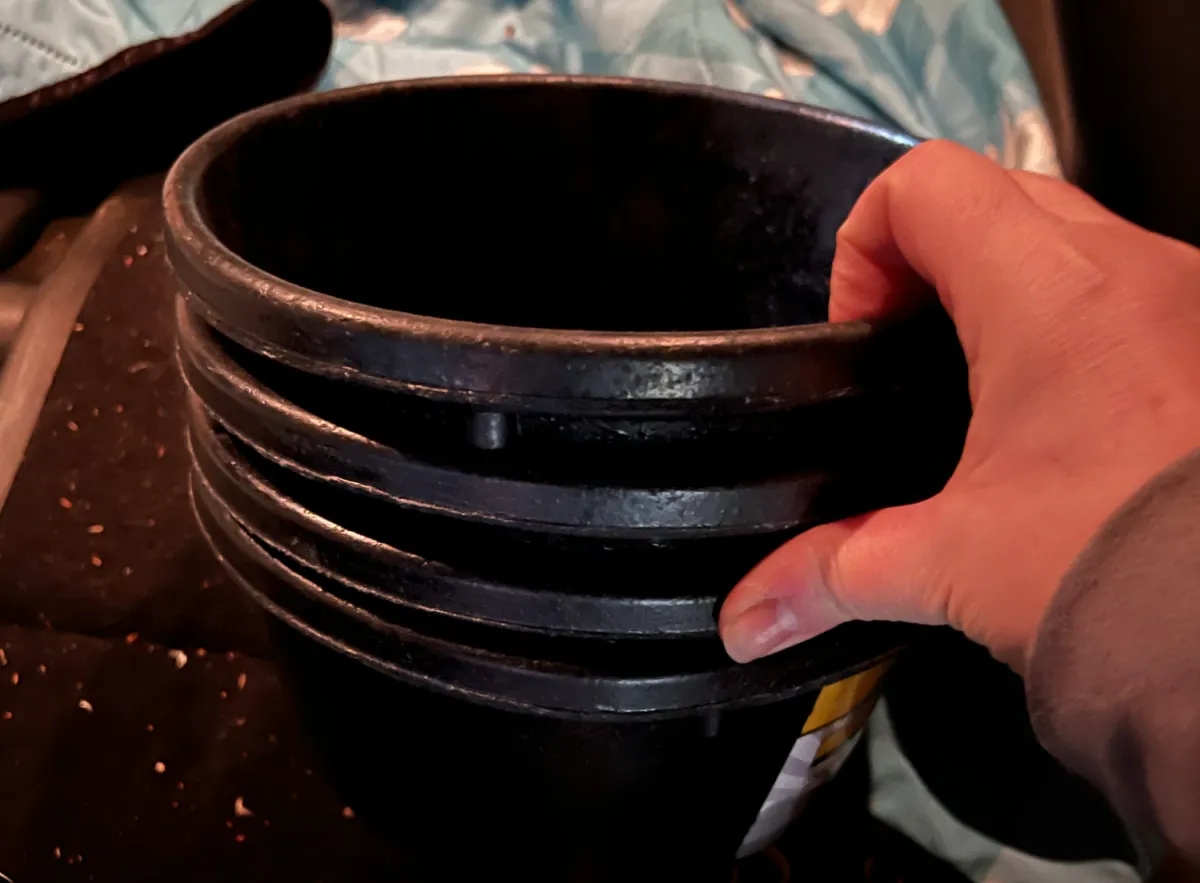
These small rubber bowls work great for grain!
Treats: Because Every Flock Deserves A Favorite Snack!
Treats play a real role in building trust and making your sheep easier to handle. Our Valais Blacknose flock goes absolutely wild for two things: alfalfa pellets and plain animal crackers from the grocery store.
Alfalfa pellets are a nutritionally reasonable occasional treat — they’re high in protein and calcium, which makes them more appropriate for ewes than for rams (where excess calcium and protein contribute to urinary calculi risk). We use them sparingly, mostly as a training reward or to bring the flock in quickly.
Animal crackers have no particular nutritional value — but our sheep are completely convinced otherwise. A small handful goes a long way in building a bond with an animal that’s still learning to trust you. Keep any treats limited to a small amount per animal per day, and make sure they’re never replacing the hay and forage that should make up the bulk of the diet.
Minerals: Free-Choice & Always Copper Free
Valais Blacknose sheep, like all sheep, require a range of trace minerals to stay healthy.
However, unlike goats or cattle, sheep are highly sensitive to copper toxicity. Excess copper accumulates in the liver and can cause sudden, severe illness and death — even from sources that seem harmless, like a goat mineral blend or certain fertilized hay fields.
We use a copper-free sheep mineral supplement and keep it available free-choice in a covered loose mineral feeder at all times. Free-choice simply means the sheep help themselves whenever they feel the need. You’ll notice consumption rates vary week to week — sometimes they barely touch it, other times they go through it quickly. Both are normal. The key is that it’s always there for them to self-regulate.
This is worth repeating: never substitute goat minerals, horse minerals, or an all-species blend for sheep. Always verify that your mineral product is specifically formulated and labeled for sheep. This is one of those areas where a small oversight can have serious consequences.
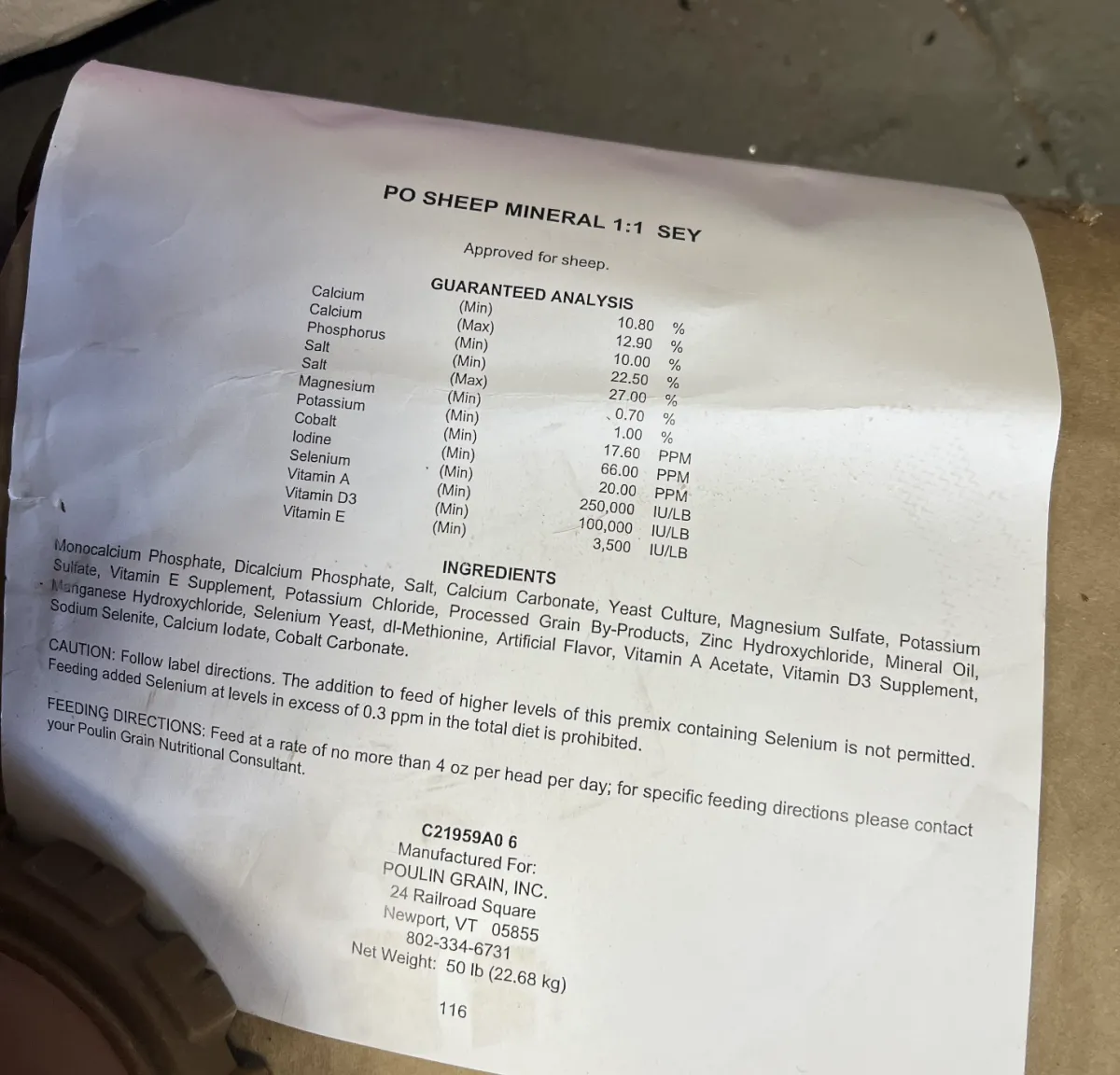
Water: Fresh, Clean, and Sometimes a Little Extra
Fresh, clean water should be available to your flock at all times.
Sheep are sometimes described as fussy about water quality — and in our experience, that reputation is earned. They’ll drink significantly less if the water is stale, dirty, or very cold, which can lead to reduced feed intake and digestive slowdowns.
In hot weather or after periods of physical stress, we’ve found that adding a small amount of salt, baking soda, and blackstrap molasses to the water can help encourage drinking and support hydration in animals that seem lethargic or off. This isn’t an everyday addition — it’s a tool for situations where dehydration seems to be a factor. The salt encourages them to drink more, the baking soda helps buffer the rumen, and the molasses adds palatability and a bit of quick energy. It’s a simple remedy that’s served us well on warm days.
Hay Feeders: What Works (and What to Watch For)
The way you deliver hay matters almost as much as the hay itself, because waste can be significant with selective eaters like Valais Blacknose sheep. Without a thoughtful feeder setup, you’ll find a lot of expensive hay on the ground and in the bedding.
Hay feeders with horizontal bars — sometimes called hay hacks or tombstone feeders — are very effective at reducing waste. The bars force sheep to eat more deliberately rather than flinging hay around. However, if you’re keeping a horned breed like the Valais Blacknose, these feeders come with a real risk: horns can get caught in the bars. A trapped sheep is a stressed sheep, and in the worst cases, one that injures itself trying to pull free. We’ve seen it happen, and it’s not worth the risk without supervision.
We’ve been experimenting with an alternative: a large water barrel cut lengthwise in half, placed horizontally with the opening facing up to hold hay. The curved sides and slight wobble make it unappealing to sit or climb in, which helps keep the hay cleaner and reduces contamination. It’s not a perfected system yet — we’ll report back once we’ve put it through a full season — but early results are promising for a horn-safe option.
Whatever style of feeder you choose, keep it elevated off the ground if possible, clean it regularly to prevent mold and bacteria, and make sure every animal in your group has adequate access. Dominant sheep will push others out if feeder space is limited.
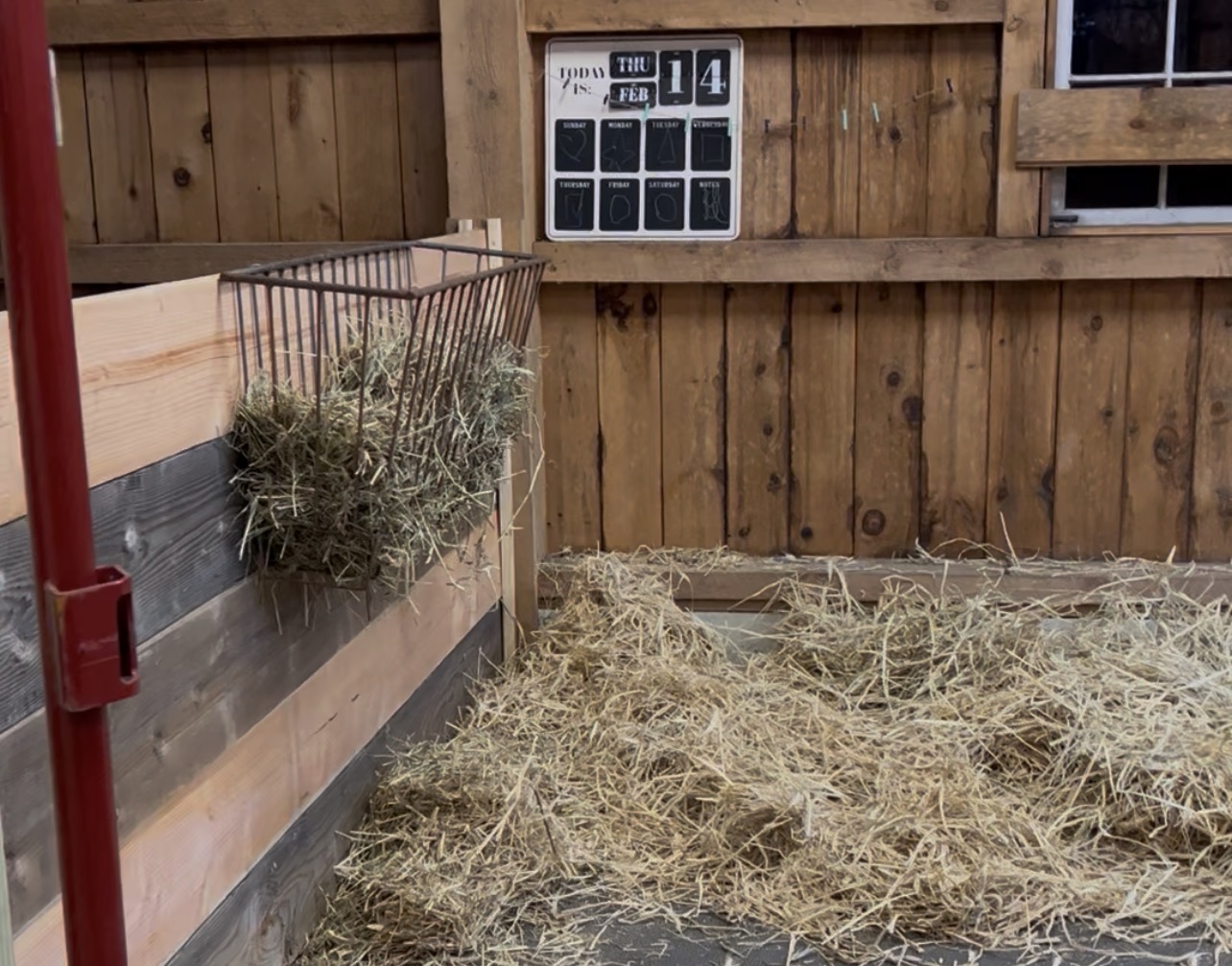
This feeder works well but there is still a slight risk of their horns getting stuck
Final Thoughts
Feeding Valais Blacknose sheep well isn’t complicated, but it does require attention to the details. Hay is the foundation — choose your cuts thoughtfully. Grain is a precision tool, not a daily habit.
Copper-free minerals should always be available. Water needs to be fresh and clean, and occasionally a little extra encouragement to drink doesn’t hurt. And your feeder setup will save you money and headaches if you choose it wisely.
Get these basics right, and you’ll have a flock that thrives. Have questions about what we do at Wool & Wonder Farm, or something you’d like to see covered in a future post? We’d love to hear from you.
GET STARTED
Ready to find your perfect Valais sheep?
Our Newsletter

Connect with us
Even if you're not buying from us, we're building resources to help you succeed with Valais Blacknose sheep.


Copyright 2026. This site is managed by Wool and Wonder Farm. All rights reserved.
340 Moose Hill Road, Guilford CT