Breed Guide
The Complete Guide to Valais Blacknose Sheep
In This Complete Guide:
Origins & History | Physical Characteristics | Temperament | Climate & Adaptability | Space & Housing | Feeding & Nutrition | Health & Maintenance | Practical Benefits | Breeding & Lambing | Understanding Pricing | Finding & Choosing Your Sheep | The Valais Community | The Future of Valais
Introduction: Meet the Valais Blacknose Sheep
I'm going to be straight with you. When I first saw a Valais Blacknose sheep, I thought "there's no way that's real."
Those black faces. The spiral horns. The woolly coats that make them look like they just walked out of a storybook and somehow ended up on a farm in Connecticut. But here's the thing everyone gets wrong about Valais Blacknose sheep: they're not just for the elite breeders with massive operations and unlimited budgets.
Yeah, they're expensive. Yeah, they're rare in the United States. But they're also incredibly practical, exceptionally friendly, and honestly? They should be on way more hobby farms than they currently are.
The Valais Blacknose community right now is... let's call it exclusive. Lots of fancy terminology, lots of gatekeeping, lots of "you need big pockets to get in." I respect the breeders who've worked hard to establish this breed in North America. The careful importation, the genetic planning, the dedication to breed standards - that matters.
But I also think we're at a point where this breed can grow beyond the inner circle without compromising quality.
My husband and I are building our foundation flock here in Guilford, Connecticut with that vision in mind. We're committed to breeding quality, registered Valais Blacknose sheep while making them accessible to hobby and small farmers who will appreciate what makes this breed special.
Because here's what I've learned diving deep into this breed: they're friendly enough that your kids will treat them like pets. They're hardy enough that you don't need to be a sheep expert to start. And they're genuinely useful - the wool is exceptional and they'll manage your pastures beautifully.
This guide is everything you need to know about Valais Blacknose sheep. Not the sanitized version, but not dumbed down either. The real, comprehensive information you need whether you're considering your first sheep or you're a seasoned farmer evaluating a new breed.
By the end of this, you'll have a clear understanding of what it takes to own and raise Valais Blacknose sheep. And if the answer is yes? We'll be here when you're ready. Let's start with where these remarkable animals came from.
Section 1: Origins & History Of Valais Blacknose Sheep
The Valais Blacknose sheep didn't just show up looking adorable by accident.
These sheep were developed over centuries in the Valais region of Switzerland - specifically in the upper Valais valley near the towns of Visp and Zermatt. We're talking high alpine meadows, harsh winters, steep terrain, and conditions that would break most sheep breeds.
The locals needed sheep that could handle it. Not just survive, but thrive.
So they bred for hardiness first, everything else second. Strong legs for climbing. Dense wool for brutal winters. Sure-footedness for mountain terrain. And somehow, along the way, they ended up with those distinctive black faces and legs that make them instantly recognizable.
The breed was officially recognized in Switzerland in 1962, but here's where it gets interesting: by the 1960s and 70s, Valais Blacknose sheep were nearly extinct. Modern agricultural practices, crossbreeding with other wool breeds, and the push for commercial efficiency almost wiped them out.
But Swiss breeders rallied. They established breeding programs, created registries, and slowly brought the population back.
Today there are around 19,000 registered Valais Blacknose sheep in Switzerland - still not huge numbers, but stable.
The rest of the world didn't really know about them until social media happened.
Suddenly, pictures of these "teddy bear sheep" started going viral. People couldn't believe they were real. And breeders outside Switzerland took notice.
The UK got their first imports in 2014. That's when things started moving. British breeders worked through the complex importation requirements, quarantine regulations, and genetic diversity challenges to establish the breed outside Switzerland for the first time.
North America came next. The first Valais Blacknose sheep arrived in Canada around 2016, and the United States shortly after. But we're talking small numbers - a handful of expensive imports that had to go through extensive quarantine and health protocols.
Every Valais Blacknose in North America today traces back to those initial imports. That's part of why they're expensive and why serious breeders are so careful about genetics and breeding programs. The gene pool here is still relatively small.
But it's growing.
As of 2025, there are estimated to be only a few thousand Valais Blacknose sheep in the United States. Compare that to the millions of commercial sheep, and you can see why they're still rare. But that number is increasing every year as more breeders establish flocks and breeding programs mature.
Here in Connecticut, we're part of that next wave. We're not pioneers - those breeders who did the heavy lifting of importation deserve that title. But we are committed to thoughtfully growing the breed and making these incredible sheep more accessible to the East Coast.
The bottom line? These sheep were built for tough conditions. They've survived near-extinction. They've proven they can adapt to climates far from their Swiss homeland.
That alpine heritage isn't just a cute origin story. It's why these sheep are as practical as they are beautiful.
Section 2: What Makes Them Special - Physical Characteristics
Let's talk about what you're actually looking at when you see a Valais Blacknose sheep.
The face is what gets everyone. Completely black - nose, face, ears. It's not a gradient or a spotted pattern. It's solid black against that white woolly body, and the contrast is striking. But the black doesn't stop at the face.
Their knees are black. Their hocks (the "ankles" on the back legs) are black. All four feet are black. And the tail is black.
It's like someone dipped them in ink at specific points and said "perfect, that's the look."
The rest of the body is covered in thick, white wool. And I mean thick. This isn't the smooth, fine wool you might picture on other sheep. Valais Blacknose wool is coarse, crimped, and dense. It grows long - they can easily grow 4-6 inches of wool per year. The texture is springy and has excellent loft, which makes it incredible for felting, insulation, and textured yarn.
Then there are the horns.
Both rams and ewes have them, and they spiral. Not straight, not stubby - proper spiraling horns that curve back and around. Rams develop larger, more dramatic spirals. Ewes have smaller, more delicate horns, but they're still there and still beautiful.
Size-wise, these are medium sheep. Not massive, not tiny.
Ewes typically weigh between 175-200 pounds when fully grown. Rams are bigger - usually 220-265 pounds.
They stand about 30-33 inches at the shoulder. For reference, that's bigger than a lot of hair sheep breeds but smaller than some of the massive meat breeds. They're substantial without being unmanageable.
Their build is sturdy. Broad chests, strong legs, good bone structure. Remember, these sheep were bred to climb mountains. They're not delicate or fragile. They're built like athletes.
One thing that surprises people: they're not fat. That wool makes them look MUCH bigger than they actually are. When you shear a Valais Blacknose, you'll be shocked at how much smaller the actual sheep is underneath all that fluff.
Now, if you're looking at breeding or buying, here's what matters for breed standard:
The black markings need to be in the right places - face, ears, knees, hocks, feet, tail. White markings on the face or legs are considered faults. The wool should be white, though some cream or ivory tones can appear and are generally acceptable. Both sexes should have horns. Polled (hornless) Valais are considered a fault, though they can still be registered in some registries depending on their lineage.
The overall conformation should be balanced - good straight legs, level topline, well-proportioned body. You want sheep that look healthy and well-built, not oddly shaped or unbalanced.
But here's the thing: unless you're planning to show or breed at the highest level, minor imperfections don't really matter for a great farm sheep. A small white spot on the leg doesn't change the personality or the hardiness or the wool quality.
The physical characteristics that matter most for hobby farmers? The sturdy build means they're less prone to injury. The dense wool means they handle cold incredibly well. The medium size means they're manageable without being so small they feel fragile.
And yes, they're gorgeous. That matters too. There's something special about looking out at your pasture and seeing these stunning animals. It never gets old.
Section 3: The Valais Blacknose Temperament - Why They're Ideal for Small Farms
This is where Valais Blacknose sheep break every stereotype you have about sheep.
If you've ever worked with commercial sheep breeds, you know the drill. They're flighty. They panic. They run from you. Getting them where you need them to go feels like herding... well, sheep.
Valais Blacknose are different.
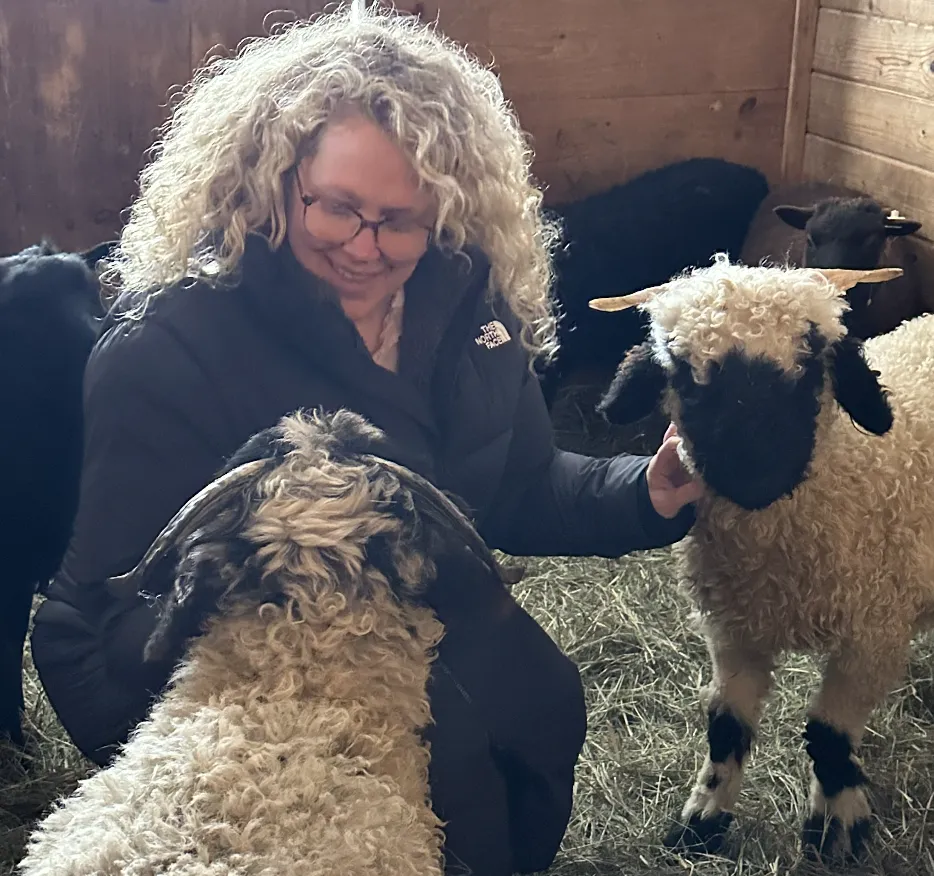
I'm not exaggerating when I say these sheep act more like dogs than livestock. They're curious. They approach you. They genuinely seem to enjoy human interaction in a way that most sheep absolutely do not. When you walk into a pasture with Valais Blacknose sheep, they come TO you. Not away from you. To you.
They'll nuzzle your hand. Follow you around. Stand there while you scratch their faces. Some owners say their Valais recognize their voices and come when called. This isn't just one or two friendly individuals in a flock. This is breed-wide temperament. It's been selected for over generations in the Swiss Alps where shepherds needed sheep that were manageable in difficult terrain. Calm, trainable sheep were easier to work with on steep mountain pastures.
That temperament carried through.
For families with children, this is huge. These sheep are gentle and patient. Kids can pet them, brush them, even lead them on halters without the sheep freaking out. Obviously, you still supervise - they're large animals with horns - but the temperament makes them far more suitable for family farms than most breeds.
They're also incredibly social animals. Not just with humans, but with each other. Valais Blacknose sheep do not do well alone. They're flock animals to their core and they need companionship. A single Valais by itself will be stressed and unhappy.
Minimum recommendation? At least two sheep, though three or more is better. They'll bond with each other, graze together, rest together. Watching them interact is honestly one of the joys of keeping them.
They also integrate well with other livestock. Many farms keep them alongside goats, cattle, chickens, or other sheep breeds without issues. They're not aggressive or territorial. They just... exist peacefully with others.
Now, let's be realistic for a second.
They're still sheep. They're still prey animals with prey animal instincts. A loud noise can startle them. A dog running at them will trigger their flight response. They're not immune to fear.
But the Valais Blacknose baseline temperament is calm. They recover quickly from startling moments. And with regular, gentle handling, they become even more trusting and manageable over time.
This temperament is also why they're easier to train than most sheep. You can halter train them. Teach them to load into trailers without drama. Get them comfortable with hoof trimming and health checks. They're smart enough to learn routines and calm enough to cooperate.
For hobby farmers who maybe haven't worked with livestock before, this is the difference between "I love my sheep" and "I'm constantly stressed trying to catch my sheep."
Training and handling Valais Blacknose feels more like working with a willing partner than fighting with a terrified animal.
One more thing: they're not loud. Some sheep breeds are constant baa-ing machines. Valais Blacknose are relatively quiet. They'll vocalize when they want something - food, attention, or if they're separated from their flock - but they're not nuisance-level noisy.
The temperament alone is reason enough to choose this breed for a small farm. Yes, they're beautiful. Yes, the wool is great. But the fact that you'll actually enjoy spending time with them? That's what makes them special.
You're not just buying livestock. You're adding members to your farm that you'll genuinely look forward to seeing every day.
Section 4: Climate & Adaptability
Here's what everyone assumes: Swiss Alpine sheep need cold climates.
Makes sense, right? They were bred in the mountains. Thick wool. Built for harsh winters. But here's the reality: Valais Blacknose sheep are surprisingly adaptable to different climates. Yes, even warm ones.
Let me start with what they're obviously great at - cold.
These sheep were developed at elevations of 3,000 to 6,500 feet in the Swiss Alps. Winters there are brutal. Snow, wind, freezing temperatures for months. And Valais Blacknose sheep handle it without breaking a sweat.
That dense wool isn't just for looks. It's serious insulation. The crimped texture traps air, creating layers of warmth. Their stocky build and thick coat mean they can handle temperatures well below freezing without needing heated barns or elaborate shelter.
Here in Connecticut, our winters are cold but nothing compared to the Swiss Alps. And our Valais will do beautifully. They'll need basic wind and rain protection - a three-sided run-in shed is plenty - but they don't need heated housing or extreme measures. In fact, most Northeast and Northern states are ideal climates for Valais Blacknose. Cold winters? No problem. They're built for it.
But what about heat? This is where people get nervous. "Can they really handle Southern summers? What about humidity?" The honest answer: yes, but you need to manage it.
Valais Blacknose sheep can adapt to warmer climates, but you can't just ignore the heat.
They need shade - good shade, not sparse tree cover. They need access to cool water at all times. And you need to time your shearing appropriately.
Many breeders in warmer states shear twice a year instead of once. That makes a massive difference. Carrying all that wool through a Texas or Georgia summer would be miserable, but shearing in early spring and again in late summer keeps them comfortable.
Fans in barns, misters, shade structures - Southern breeders use these tools successfully. Are Valais the easiest sheep for hot climates? No. But are they impossible? Also no.
The key is being realistic about what adaptation looks like. These sheep will acclimate, but you have to help them.
Humidity is another factor. Valais Blacknose have thick wool that can hold moisture, so in very humid climates, you need to watch for skin issues and manage their coat health carefully. Regular shearing, good ventilation in shelters, and keeping them out of muddy, wet conditions helps.
I'll also say this: cold stress is more dangerous for sheep than heat stress in most cases. Sheep can seek shade and pant to cool down. But if they're wet and cold without shelter, that's life-threatening fast.
Valais Blacknose are naturally equipped to handle cold. They just need your help with heat management if you're in a warm climate.
One of the reasons they adapt as well as they do is their overall hardiness. These aren't fragile, high-maintenance animals. Their alpine heritage means they're built tough - good immune systems, strong constitutions, resilient to environmental stress.
They're not going to fall apart because the weather isn't perfect. They're built to handle variability.
Here in the Northeast, we get all four seasons pretty intensely. Hot, humid summers. Cold, snowy winters. Wet springs. Unpredictable falls. Valais Blacknose sheep handle that variability well.
If you're in a climate with extreme heat year-round, are these the best choice? Probably not. But if you're in a temperate or cold climate - or even a warm climate where you're willing to provide proper heat management - they'll do great.
The bottom line: Don't let climate be the thing that scares you away from this breed unless you're in an truly extreme environment. These sheep are tougher and more adaptable than most people give them credit for.
And honestly? Their cold hardiness is a huge advantage. Winter livestock care is expensive and time-consuming for many breeds. Valais Blacknose sheep reduce that burden significantly.
Section 5: Space & Housing Requirements
Let's talk about one of the biggest myths keeping people from getting Valais Blacknose sheep: "I don't have enough space."
You might have more space than you think.
The general rule of thumb for sheep is 1 acre per 5-6 sheep if you're relying entirely on pasture for grazing. But that's assuming you're not supplementing with hay and you want them to have plenty of fresh grass year-round.
For hobby farmers with smaller properties, you can absolutely keep Valais Blacknose sheep on less space if you're willing to supplement their diet.
Two sheep can thrive on a half acre if you're providing hay and managing the pasture well. Four sheep can do fine on an acre with supplemental feeding.
Are we talking commercial-scale operations? No. But we're talking about a very manageable setup for someone with a small hobby farm.
The key is rotational grazing. Don't just turn them loose on one patch of land and leave them there indefinitely. Move them between pasture sections, let areas rest and regrow, and you'll get way more mileage out of your available space. Valais Blacknose are efficient grazers. They'll eat grass, browse on brush, tackle weeds. They're not picky. That dense wool and hardy constitution means they're not high-maintenance about their pasture quality either.
Now let's talk fencing.
Good news: Valais Blacknose are not escape artists. They're not jumpers. They're not going to test your fences constantly like goats do.
Standard sheep fencing works fine. Four to five feet tall is plenty. You can use woven wire, electric netting, or even well-maintained board fencing. The goal is to keep them in and keep predators out.
Speaking of predators - your fencing needs to account for what's in your area. Coyotes, dogs, bears depending on where you are. Valais Blacknose are sturdy sheep, but they're still prey animals. Secure fencing is non-negotiable. Many farms also use livestock guardian dogs, llamas, or donkeys for added protection. Not required, but it's smart if you're in an area with active predator pressure.
Shelter is the other piece, and honestly? It's simpler than most people expect.
Valais Blacknose do not need a fancy barn. They don't need heated housing. They don't even need four walls. A three-sided run-in shed is sufficient.
You want something that blocks wind and keeps them dry. That's it.
Size-wise, plan for about 15-20 square feet of shelter space per sheep. So for four sheep, you're looking at an 8x10 or 10x10 shed. Not massive. Very doable. The shelter needs good ventilation - sheep can handle cold way better than they handle damp, stuffy conditions. Airflow matters more than insulation in most climates.
Bedding-wise, straw works great. You'll need to clean it out periodically and add fresh bedding, but it's not an everyday chore. More like weekly or bi-weekly depending on how much time they spend in the shelter. In summer, they'll mostly use the shelter for shade. In winter, they'll use it more for wind and rain protection. But even in winter, don't be surprised if they choose to hang out in the pasture during the day. They're hardy.
Water is critical. They need constant access to fresh, clean water. Heated waterers in winter if you're in a freezing climate. Multiple water sources if your pasture is large.
Feeding setup depends on your system. Many people use hay feeders to keep hay off the ground and reduce waste. Grain or supplement feeding might require a separate area or individual feeders depending on your flock dynamics.
You'll also want a small area where you can separate a sheep if needed - for health checks, hoof trimming, or if one needs to be isolated for any reason. Doesn't need to be big. Just a secure pen or section of the barn.
Here's the reality: Valais Blacknose sheep don't require elaborate infrastructure. If you've got a basic pasture, decent fencing, and a simple shelter, you're 90% of the way there. Compare that to some livestock that need climate-controlled barns, complex feeding systems, or acres and acres of space. Valais are manageable.
The space and housing requirements shouldn't be the barrier. For most hobby farms, what you already have - or can easily create - is enough.
Section 6: Feeding & Nutrition
Feeding Valais Blacknose sheep is surprisingly straightforward.
These are grazing animals. That's what they're designed to do. Put them on decent pasture and they'll happily spend their days eating grass, clover, and whatever browse they can find. During the growing season - spring through fall - good quality pasture can meet most of their nutritional needs. They'll graze, ruminate, graze some more. It's what sheep do.
But "most" isn't "all."
Even on great pasture, you'll likely need to supplement with minerals and possibly grain depending on the individual sheep's needs, whether they're pregnant or nursing, and what your pasture quality actually is.
Let's start with hay, because that's your foundation for the non-growing season.
In winter, or anytime pasture isn't sufficient, you're feeding hay. Grass hay, mixed grass-legume hay, or straight alfalfa if you want higher protein (though straight alfalfa can be too rich for non-pregnant sheep). Quality matters more than type. You want hay that's green, smells fresh, and isn't dusty or moldy. Bad hay can cause respiratory issues and won't provide adequate nutrition.
How much? A general guideline is about 3-4% of their body weight per day in hay when they're not on pasture. So a 200-pound ewe would eat roughly 6-8 pounds of hay per day. That's not a precise science. Some sheep eat more, some less. Weather affects it - they'll eat more in cold weather to maintain body heat. Pregnancy and lactation increase needs significantly.
You'll learn to read your sheep. Are they maintaining good body condition? Are they eager for hay or leaving some behind? Adjust accordingly.
Grain and concentrates are where things get more individualized.
Non-pregnant, non-lactating sheep on decent pasture might not need grain at all. But pregnant ewes, nursing ewes, and growing lambs often benefit from supplemental grain to meet their increased nutritional demands. Sheep-specific feed is important. Don't use cattle feed or goat feed - the copper levels can be toxic to sheep. Look for feed formulated specifically for sheep.
How much grain? It varies. A pregnant ewe in her last month might get a pound or two per day. A lactating ewe nursing twins might need even more. Young, growing lambs benefit from creep feed (grain accessible to lambs but not adult sheep) to support healthy growth.
But here's the thing: overfeeding grain causes problems. Obesity, metabolic issues, hoof problems. More isn't better. You're supplementing, not replacing their forage-based diet.
Minerals are non-negotiable.
Sheep need access to a good quality sheep mineral mix at all times. Free choice, meaning it's always available and they can consume as much as they need. Loose minerals are better than blocks. Blocks require licking and sheep don't always consume enough that way. Loose minerals in a feeder are easier for them to eat. Make sure it's formulated for sheep. Again, copper is the issue - goat and cattle minerals have higher copper levels that are toxic to sheep.
Water. I can't emphasize this enough.
Clean, fresh water available at all times. In winter, that means breaking ice or using heated waterers. In summer, that means refilling frequently because they'll drink more. Sheep can drink a gallon or more per day, more in hot weather or when lactating. Dehydration is dangerous and happens faster than you'd think.
Salt is another basic need. Sheep need salt for proper bodily function. Many people provide a plain white salt block in addition to their mineral mix. Some mineral mixes include salt, some don't - check your label. Now let's talk about some practical realities of feeding Valais Blacknose specifically.
Their dense wool means they're well-insulated, but it also means they're using energy to maintain and grow that coat. Make sure they're getting adequate nutrition to support wool production, especially in the months leading up to shearing.
Pregnant ewes in late pregnancy need increased nutrition - they're growing lambs. Skimping here can lead to weak lambs or metabolic issues in the ewe. Nursing ewes need even more. They're producing milk for one or more lambs. Their nutritional demands are high and if you don't meet them, they'll lose body condition fast.
Growing lambs need quality nutrition to reach their potential. Stunted growth from poor nutrition early on doesn't get reversed later.
The cost of feeding is something to factor in. Hay prices vary wildly by region and year, but budget for it. A sheep eating hay full-time will go through several tons per year. Grain adds up too.
But compared to many livestock species, sheep are relatively economical to feed. They're ruminants - they convert grass and hay into body condition efficiently. You're not buying expensive commercial feed for every meal like you would with pigs or chickens.
One last thing: Valais Blacknose are not picky eaters. They'll eat weeds, brush, overgrown pasture that other sheep might turn their noses up at. That browsing behavior makes them great for pasture maintenance. Bottom line?
Feeding Valais Blacknose sheep is manageable. Good pasture, quality hay, appropriate minerals, clean water, and targeted supplementation when needed.
Section 7: Health & Maintenance
Let's talk about what it actually takes to keep Valais Blacknose sheep healthy.
The good news first: these are hardy sheep. That alpine heritage means they've got strong immune systems and good overall resilience. They're not fragile or prone to constant health crises. But "hardy" doesn't mean "maintenance-free." There are routine tasks you need to stay on top of, and health issues you need to watch for. Let's break it down.
Hoof trimming is the big one.
Sheep hooves grow continuously, like your fingernails. In the wild, they'd wear down naturally from walking on rocks and rough terrain. On a farm, especially on soft pasture, they don't wear down fast enough. Overgrown hooves cause pain, lameness, and create pockets where bacteria can thrive and cause hoof rot. You'll need to trim hooves every 6-8 weeks on average. Some sheep need it more frequently, some can go a bit longer. You'll figure out your sheep's rhythm.
Hoof trimming isn't hard, but it does require practice. You need proper hoof shears, a way to restrain the sheep safely, and the knowledge of what you're actually trimming. There are plenty of videos and resources online, and many vets or experienced shepherds will teach you hands-on. Can you pay someone to do it? Yes. But at 6-8 week intervals, that gets expensive fast. Learning to do it yourself is worth it.
Shearing is the other major maintenance task.
That beautiful wool needs to come off once or twice a year depending on your climate. In most areas, once a year in spring is standard. In hot climates, shearing twice a year keeps them comfortable. Shearing is a skilled job. You can learn to do it yourself - there are classes, videos, practice makes progress. But most people hire a professional shearer, especially starting out. Cost varies by region, but expect to pay $20-50 per sheep depending on the shearer and how many sheep you have. Some shearers have minimums or travel fees, so having just two sheep might be harder to schedule than having a small flock. Shearing needs to happen. Not optional. Overgrown wool causes overheating, makes them more prone to parasites, and can lead to wool blindness if it grows over their eyes.
Parasite management is ongoing.
Internal parasites - primarily barber pole worms and other gastrointestinal worms - are the biggest health threat to sheep. Left unchecked, they cause anemia, weight loss, and death. You'll need a deworming protocol. This doesn't mean deworming on a rigid schedule regardless of need - that creates resistant parasites. It means monitoring your sheep (checking eyelid color with the FAMACHA system is common), doing fecal egg counts, and deworming strategically when needed.
Your vet can help you develop a protocol appropriate for your area. Parasite pressure varies hugely based on climate and pasture management. Rotational grazing helps. Not keeping pastures overstocked helps. Keeping sheep off wet, muddy areas helps. But you'll still likely need to deworm periodically. External parasites - lice, mites, keds - are less common but still possible. Regular observation helps you catch issues early. If you see scratching, rubbing, wool loss, investigate.
Vaccinations are part of responsible sheep ownership.
At minimum, you'll want to vaccinate for Clostridium perfringens (types C and D) and tetanus. This is usually done with a combination vaccine called CD&T. Lambs get their first dose at 6-8 weeks, a booster a few weeks later, then annual boosters for adults. Pregnant ewes get a booster 4-6 weeks before lambing so they pass antibodies to their lambs through colostrum. There are other vaccines available depending on what diseases are prevalent in your area - your vet can advise.
Common health issues to watch for:
Hoof rot and hoof scald - bacterial infections of the hoof. Usually caused by wet, muddy conditions. Caught early, they're treatable. Left too long, they're painful and hard to cure.
Bloat - can happen if sheep gorge on rich feed suddenly. Life-threatening if severe. Prevention is key - introduce new feeds gradually.
Pregnancy toxemia (ketosis) - metabolic disorder in late pregnancy, usually in ewes carrying multiples or ewes in poor condition. Requires immediate vet attention.
Parasites - already covered, but worth repeating because they're the number one killer of sheep.
Respiratory issues - pneumonia can happen, especially in lambs or during stressful weather changes. Watch for coughing, nasal discharge, lethargy.
Finding a vet is something to sort out before you need one urgently.
Not all vets see sheep. Large animal vets are your best bet, but even some large animal practices focus on horses or cattle and don't have much sheep experience. Call around. Find a vet who's comfortable with sheep before you have an emergency. Ask other sheep owners in your area for recommendations. Some areas have mobile large animal vets who come to your farm. Some require you to trailer animals to their clinic. Know what your options are. Emergency situations do happen. Lambing complications. Bloat. Sudden illness or injury. Having a vet lined up and knowing when to call them could save a sheep's life.
Body condition scoring is a skill worth learning.
You should be able to assess whether your sheep are at a healthy weight by feeling along their spine and ribs. Too thin? Increase feed. Too fat? Cut back, especially on grain. Obesity in sheep causes real health problems - metabolic issues, lambing difficulties, hoof problems. Don't let them get fat just because they're pets.
Biosecurity matters if you're bringing in new sheep or attending shows.
Quarantine new arrivals for at least 30 days. Deworm them before introducing them to your flock (to avoid bringing in resistant parasites). Watch for signs of illness. If you take sheep to shows or events, assume they've been exposed to something and monitor them closely when they return.
The reality check: Valais Blacknose sheep are not high-maintenance compared to many breeds. But they're also not set-it-and-forget-it livestock.
You need to show up. Check on them daily. Notice when something's off. Stay on top of hoof trimming and shearing. Manage parasites proactively. Build a relationship with a vet. If that sounds overwhelming, it shouldn't. Once you're in a routine, it becomes second nature. But if you're thinking these sheep are just decorative lawn ornaments that take care of themselves, that's not reality. They're livestock. They deserve proper care. And with proper care, they'll thrive.
Section 8: The Practical Benefits
Let's talk about what you actually get from owning Valais Blacknose sheep beyond the obvious (they're adorable).
Because yes, they're beautiful. But if that's all they were, they'd be expensive lawn ornaments. The truth is, these sheep earn their keep in multiple ways.
The wool!
Valais Blacknose produce 8-10 pounds of wool per shearing. That's a significant amount of fiber.
The quality is what sets it apart. This isn't fine merino wool - it's coarser, with a micron count typically in the 30-40 range. But that texture is exactly what makes it valuable for certain uses.
The crimp and loft in Valais wool make it perfect for felting. It felts beautifully without being so fine that it's difficult to work with. Felters love this wool. It's also excellent for textured yarn. That springiness and body create yarn with structure and character. Not the soft, drapey yarn you'd use for a baby blanket, but the kind of yarn that makes great outerwear, rugs, and durable items.
And it insulates like crazy. Remember, this wool kept sheep warm in the Swiss Alps. Products made from Valais wool are legitimately warm.
Can you sell the wool? Absolutely. Raw fleece sells to hand spinners and felters. Prices vary, but quality Valais fleece can fetch $10-20+ per pound depending on the market and how you're selling it. You can also have it processed into roving, batts, or yarn and sell finished fiber products. Or keep it for your own use if you're into fiber arts. Even if you're not trying to make money from the wool, it has value. It's not waste. And that matters when you're shearing once or twice a year.
They're incredible pasture managers.
Valais Blacknose sheep are efficient grazers and they're not picky. Grass, weeds, brush, overgrown areas - they'll tackle it all.
Many hobby farmers get sheep specifically for pasture management and Valais are excellent at this job. They'll keep your fields mowed, reduce invasive plant species, and browse on woody plants that other grazers might ignore.
Rotational grazing maximizes this benefit. Move them through different pasture areas and they'll keep everything under control without overgrazing any one spot. Compare that to constantly mowing large properties or paying for bush hogging. Sheep do the work for you, and they fertilize as they go.
Speaking of fertilizer - the manure is gold.
Sheep manure is one of the best fertilizers for gardens. It's high in nitrogen, relatively balanced in nutrients, and breaks down well.
You can compost it and use it in your garden beds. Spread it on pastures to improve soil health. Sell it to gardeners if you have more than you need. If you're running a hobby farm with gardens or wanting to improve your land, sheep manure is a genuine asset.
They have agrotourism appeal.
This might not be relevant for everyone, but if you're open to it, Valais Blacknose sheep are a draw. People want to see them. They want to take pictures with them. They want to bring their kids to meet them. Some farms charge for farm visits or photo sessions. Others use the sheep as part of farm stay experiences or agricultural education programs.
Even if you're not monetizing it directly, having Valais on your property creates opportunities for connection with your community. School groups, 4-H clubs, photographers - there's interest. And honestly? It's fun. Sharing these sheep with people who've never seen them before is genuinely enjoyable.
There's breeding potential and investment value.
If you're buying registered, quality Valais Blacknose sheep, you're not just buying pets. You're buying breeding stock with real value.
Lambs from good lines sell for thousands of dollars. If you breed responsibly and produce quality animals, there's absolutely a market for them. Even if breeding isn't your primary goal, the option is there. Your initial investment in a few ewes could grow into a small breeding program if you choose. And the value holds. These sheep are in demand. If you needed to sell for some reason, registered Valais Blacknose with good genetics will find buyers.
Compare that to livestock that depreciates or has limited resale value. Valais are an actual investment.
They create an atmosphere.
This is harder to quantify, but it matters. There's something about having sheep on your property that changes the feel of the place. It's peaceful. It's purposeful. It's connected to the land in a way that's hard to describe until you experience it.
Valais Blacknose, with their calm temperament and striking appearance, amplify that. They're not just livestock in the background. They're part of the daily rhythm of your farm. Morning chores become something you look forward to. Watching them graze in the evening is genuinely relaxing. They bring life and presence to your land. For many hobby farmers, that quality-of-life benefit is worth as much as any of the practical returns.
The bottom line:
Valais Blacknose sheep give you wool, pasture management, fertilizer, breeding potential, agrotourism opportunities, and genuine enjoyment of your property. They're not a one-dimensional investment. They're working animals that contribute in multiple ways while also being a pleasure to own. That's what makes them worth the initial cost. You're not just buying expensive pets. You're adding genuinely useful, productive, beautiful animals to your farm.
Section 9: Breeding & Lambing
If you're buying Valais Blacknose sheep, breeding is probably on your radar at some point.
Whether that's "I want to experience lambing once" or "I want to build a breeding program," understanding how breeding and lambing work with this breed matters. Let's start with the basics.
Breeding season for sheep is typically fall - September through November in the Northern Hemisphere. Sheep are naturally short-day breeders, meaning shorter daylight hours trigger their reproductive cycle. Ewes come into heat (estrus) every 17 days or so during breeding season. The heat cycle lasts about 24-36 hours. If you have a ram with your ewes during this time, nature takes care of the rest. Gestation is approximately 145-150 days. Five months, give or take. So fall breeding means spring lambs - typically March through May. That timing is actually ideal. Lambs are born when weather is moderating, pasture is starting to green up, and you're not dealing with brutal cold or extreme heat.
Ram or AI? If you want to breed, you need a ram or access to artificial insemination.
Owning a ram is a decision. Rams are strong, can be aggressive during breeding season, and require separate housing when you're not breeding. They're also another mouth to feed year-round for a job they do a few months per year. Many small-scale breeders share rams, lease rams for breeding season, or bring their ewes to a ram for breeding. All viable options.
Artificial insemination is possible with sheep, but it's less common than with cattle. It requires more skill, timing is critical, and success rates aren't as high. Most small operations use live cover (natural breeding).
How many lambs?
Valais Blacknose ewes typically have single or twin lambs. Twins are common, especially in mature ewes in good condition. Triplets happen occasionally but are less common than in some other breeds. First-time mothers (yearlings or two-year-olds) are more likely to have singles. That's actually ideal - easier first lambing experience, easier for a new mother to manage. Lambing itself is where things get real. Most ewes lamb without assistance. Valais Blacknose are generally good mothers with relatively easy births. But complications happen.
You need to be prepared to assist if needed. Malpresentations, large lambs, weak labor - these things happen and a ewe can die or lose lambs without intervention. Many shepherds keep a lambing kit ready: iodine for navels, towels, lubricant, lamb puller if needed, colostrum replacer, bottles for supplemental feeding. Better to have it and not need it than need it and not have it.
Some people set up cameras in their barn during lambing season so they can monitor without disturbing the ewes constantly. Some camp out in the barn. Some check frequently and hope they catch births in time. There's an art to knowing when to help and when to let the ewe handle it. Jumping in too soon can interfere with natural bonding. Waiting too long can cost lives. Having an experienced shepherd or your vet on call during lambing season is smart, especially your first few years.
Once lambs arrive, the first 24-48 hours are critical.
Lambs need to get colostrum - the first milk, which is packed with antibodies - within the first few hours of life. If a lamb isn't nursing or a ewe isn't producing enough milk, you need to intervene with supplemental colostrum. Navel dipping with iodine prevents infection. Making sure lambs are dry and warm prevents hypothermia. Confirming that the ewe has accepted her lambs and is allowing them to nurse is essential.
Some ewes are incredible mothers immediately. Others need a little help bonding, especially first-timers. Occasionally a ewe rejects a lamb entirely and you're bottle feeding. Bottle lambs are work. Feeding every few hours around the clock for the first week, then gradually spacing out feedings. It's doable, but it's a commitment.
Growth and development happens fast.
Healthy lambs are up and nursing within an hour or two of birth. They're bouncing around within days. By a few weeks, they're mini versions of their parents, playing and exploring. Lambs typically stay with their mothers until they're 8-12 weeks old. Weaning age depends on the lamb's size and development, and what your plan is for them.
Ram lambs being sold as pets or wethers (castrated males) can stay with their mothers longer. Ram lambs being kept for breeding need to be separated before they reach sexual maturity - usually around 5-7 months. Ewe lambs can often stay with the adult ewes, though some breeders separate them to control their diet and growth.
Castration and tail docking are management decisions.
Many sheep breeds have their tails docked (shortened) shortly after birth to prevent fecal build-up and fly strike. Valais Blacknose have naturally shorter tails than some breeds, so tail docking is less commonly done, but some breeders still do it.
Ram lambs not being kept for breeding are often castrated. This makes them calmer, easier to manage, and suitable for sale as pets or fiber animals.
Both procedures are typically done in the first week or two of life using banding tools. Some people use surgical methods. Your vet can advise or do the procedures if you're not comfortable doing them yourself.
Breeding for quality matters if you're serious about this. Not every sheep should be bred. Breeding animals with faults, poor conformation, health issues, or bad temperaments does a disservice to the breed and to future buyers.
If you're building a breeding program, you should be selecting for:
Correct breed characteristics (proper markings, horns, conformation)
Good temperament (friendly, calm, manageable)
Health and hardiness
Fertility and mothering ability
That means making hard decisions sometimes. A pet-quality sheep might be a wonderful animal but not suitable for breeding.
Many breeders keep detailed records - pedigrees, breeding dates, lambing notes, growth rates. This helps you make informed decisions over time about which animals are producing the best offspring.
Registration is important if you're breeding for sale.
Registered lambs are worth significantly more than unregistered lambs. Buyers want documented genetics and the ability to register their own offspring. Different registries exist for Valais Blacknose in North America. Make sure you understand the requirements and keep up with paperwork.
The reality of breeding:
It's exciting. Watching lambs being born, seeing them grow, being part of continuing this breed - there's something genuinely special about it. But it's also work. Sleepless nights during lambing season. Difficult decisions about which animals to breed. The heartbreak of losing a lamb or a ewe despite your best efforts. If you go into it with realistic expectations and a commitment to doing it responsibly, breeding Valais Blacknose can be incredibly rewarding. If you're not ready for that level of involvement, there's absolutely nothing wrong with buying wethers or spayed ewes and just enjoying them as fiber animals or pets.
You don't have to breed to benefit from owning this breed.
Section 10: The Investment - Understanding Valais Blacknose Pricing
Let's talk about the number that makes people's eyes widen.
Valais Blacknose sheep are expensive. There's no way around it. You're looking at anywhere from $5,000 to $25,000+ per sheep depending on quality, age, gender, bloodlines, and registration status. For people used to commercial sheep selling for a few hundred dollars, that's shocking. I get it. But there are real reasons these sheep cost what they cost. And understanding those reasons helps you make an informed decision about whether the investment makes sense for you.
Rarity drives price.
There are only a few thousand Valais Blacknose sheep in the United States. Compare that to millions of commercial sheep, and you can see the supply issue. Every Valais Blacknose in North America traces back to a small number of expensive imports. Those original imports cost breeders tens of thousands of dollars per sheep - import fees, quarantine costs, transportation, health testing. That initial investment gets built into the price of offspring. As the breed becomes more established and the population grows, prices will likely moderate somewhat. But we're not there yet.
Right now, demand significantly outpaces supply. Breeding quality sheep is expensive. Responsible breeders aren't just turning sheep loose and hoping for the best.
They're:
Selecting for correct breed characteristics
Health testing
Providing excellent nutrition and care
Maintaining registrations and pedigrees
Often traveling or paying significant stud fees for quality rams
Investing years before they even have lambs to sell
Those costs get factored into pricing. You're not just paying for the lamb. You're paying for the years of work and investment that went into producing that lamb.
What affects pricing within the breed?
At the lower end - $5,000 to $8,000 - you're typically looking at:
Wethers (castrated males)
Pet-quality ewes (may have minor faults)
Unregistered or grade animals
Sheep from less established bloodlines
Mid-range - $8,000 to $15,000:
Registered ewe lambs from good lines
Breeding-quality ewes (proven or unproven)
Young rams from quality parents
Upper range - $15,000 to $25,000+:
Exceptional breeding stock with imported bloodlines
Proven breeding ewes with excellent production records
High-quality rams from champion lines
Show-quality animals
Age matters too. Lambs are typically less expensive than proven breeding adults. You're paying a premium for a ewe who's already lambed successfully or a ram who's proven fertile.
Registration status is huge.
Registered sheep with documented pedigrees command significantly higher prices than unregistered sheep. Registration proves the sheep's genetics, allows buyers to register offspring, and provides traceability. If you're buying for breeding, registration is non-negotiable. If you're buying as pets or for fiber only, unregistered sheep can be a more affordable option.
Is the investment worth it? That depends on your goals. If you're looking at this purely as a financial investment - buying sheep, breeding them, selling lambs for profit - the math can work, but it takes time.
Let's say you buy two registered ewe lambs for $10,000 each. That's $20,000 upfront. Add in fencing, shelter, feed, vet care, and you're probably at $25,000+ before you sell a single lamb. If those ewes each produce twins annually starting at age two, you're looking at four lambs per year. If those lambs sell for $5,000-$8,000 each (realistic for quality registered lambs), you're grossing $20,000-$32,000 per year. Subtract ongoing costs (feed, health care, shearing, etc.), and you're looking at several years before you break even, then profit after that.
That's not a get-rich-quick scheme. But it's a viable path if you're patient and committed.
For hobby farmers who want the wool, the pasture management, the enjoyment of the animals, and maybe occasionally selling a lamb, the investment looks different. You're not buying purely for ROI. You're buying for quality of life, for the experience, for the practical benefits. The fact that the sheep hold or increase in value is a bonus, not the primary motivator.
Financing and payment plans
Some breeders offer payment plans, especially for higher-priced animals. Not all do, but it's worth asking. This can make the upfront cost more manageable - paying $1,000/month for 10 months instead of $10,000 upfront.
The comparison to other livestock: Yes, Valais Blacknose are more expensive than commercial sheep. But compare them to other registered, rare breed livestock and the pricing isn't outrageous. Quality registered cattle? Tens of thousands of dollars. Rare breed horses? Easily five figures. Even registered goats from established bloodlines can run several thousand dollars.
Within the context of registered, rare breed livestock, Valais Blacknose are priced appropriately for their scarcity and demand.
Avoiding scams and overpriced animals
Unfortunately, high prices attract people looking to make a quick buck. There are sellers out there misrepresenting animals, inflating bloodlines, or charging premium prices for pet-quality sheep. Do your homework. Ask for registration papers. Look at the parents if possible. Talk to other breeders. Check references.
A legitimate breeder will be transparent about the animal's quality, any faults, health history, and lineage. They'll answer your questions. They'll often have a contract that includes health guarantees and return policies. If someone's being evasive, rushing you, or making claims that sound too good to be true, walk away.
The long view: Buying Valais Blacknose sheep is a long-term decision. These animals can live 10-12 years or more. That's a decade-plus relationship you're entering into.
The initial price is significant, but amortized over the years you'll own them, it becomes more reasonable. Especially when you factor in wool production, potential lamb sales, and the value they bring to your property. If you're expecting immediate returns or treating this as a short-term flip, you'll be disappointed. If you're thinking long-term - building a small flock, enjoying the process, maybe building a breeding program over years - the investment makes sense.
The bottom line: Yes, Valais Blacknose sheep are expensive. But they're rare, in-demand, useful, beautiful animals that hold their value and offer multiple returns on investment. If the price is an absolute dealbreaker, that's okay. But if you can afford the initial investment and you're committed to proper care, these sheep will give you value in ways that go well beyond the purchase price.
Section 11: Finding & Choosing Your Valais Blacknose
So you've decided you want Valais Blacknose sheep. Now comes the important part: finding the right breeder and choosing the right animals.
This isn't a purchase you want to rush or get wrong. Start by understanding what you're looking for.
Are you buying breeding stock or pets?
Do you want registered sheep or are you okay with unregistered?
Do you want lambs or adults?
Rams, ewes, or wethers?
Getting clear on your goals helps you have productive conversations with breeders and avoid buying animals that don't fit your actual needs.
Finding breeders: The Valais Blacknose breeding community in the US is still relatively small, which means there aren't hundreds of breeders to choose from.
That's actually helpful in some ways - the community is tight-knit, and reputations matter. But it also means you might need to be patient or willing to travel. Start by searching online. Most breeders have websites or social media presence. Look for breeders in your region first, but don't limit yourself geographically if you're serious.
Join Valais Blacknose groups on Facebook and other platforms. These communities are active and members often share information about available sheep and reputable breeders. Check breed registries and associations. They often have breeder directories. And here's something we're building: a recommended breeder list right here on this site. We're vetting farms that meet our standards for animal care, transparency, and quality. It's not exhaustive - there are good breeders who won't be on our list simply because we haven't connected yet - but it's a starting point.
What to look for in a breeder
Transparency is number one. A good breeder will answer your questions, show you their animals, explain their breeding program, and be honest about any faults or limitations in the sheep they're selling. If someone's evasive, won't let you visit, or pressures you to buy quickly, that's a red flag.
Good breeders will ask YOU questions too. They want to know their sheep are going to good homes. If a breeder sells to anyone with a checkbook without asking about your setup or experience, that's concerning.
Look at their animals in person if at all possible.
Are the sheep healthy?
Clean?
Well-cared for?
Is the property well-maintained?
Do the sheep seem calm and well-socialized?
Ask about their breeding practices. What are they selecting for? How do they manage genetics? Do they health test? What's their lambing success rate? Registration paperwork should be in order. If you're buying registered sheep, the breeder should provide documentation and transfer paperwork through the appropriate registry.
Health guarantees and contracts matter. Reputable breeders often provide some form of health guarantee and have written sales agreements. Read them carefully. References are valuable. Ask if you can talk to previous buyers. A breeder with nothing to hide will have satisfied customers who are happy to share their experience.
Red flags to watch for
Prices that seem too good to be true usually are. If someone's selling registered Valais Blacknose significantly below market rates, ask why. There might be a legitimate reason (older animals, minor faults), or it might be a scam.
Unclear or suspicious registration. Some sellers claim sheep are "eligible for registration" but haven't actually registered them. Others sell grade sheep (unregistered) but imply they're purebred. Get clarity in writing.
Reluctance to provide information or let you visit. Legitimate breeders want you to see what you're buying.
Pressure tactics. "This lamb has multiple interested buyers, you need to decide now" might be true, but it's also a classic sales pressure technique. Good breeders will give you time to make an informed decision.
No health history or vet records. You should be able to see vaccination records, deworming history, and any health issues.
Questions to ask before buying:
Are the sheep registered? With which registry?
Can I see the parents?
What's the health history? Vaccinations? Deworming protocol?
Have there been any health issues in this line?
What's the temperament like? How are they with handling?
What are you feeding them?
When were they last sheared? Last hoof trim?
Is there a health guarantee or return policy?
Will you be available for questions after purchase?
Can you provide references from previous buyers?
A good breeder will appreciate these questions. They show you're serious and informed.
Evaluating individual sheep
If you're looking at breeding stock, conformation matters. You want sheep that match breed standards - correct markings, good structure, appropriate size.
But don't get so caught up in show-quality perfection that you miss a great animal with a minor cosmetic fault. Unless you're planning to show or breed at the highest level, a small white spot on a leg doesn't diminish the sheep's value as a farm animal. Temperament is huge. Spend time with the sheep you're considering. Are they calm? Approachable? Do they seem comfortable with handling?
If a breeder won't let you interact with the sheep before buying, that's a problem.
Health is non-negotiable. Look for bright eyes, healthy coat, good body condition, sound movement. Any signs of illness, limping, or poor condition should be addressed before purchase.
Wait lists and timing
Most quality breeders have wait lists. Lambs are typically reserved before they're even born. Get on wait lists early. Be patient. Rushing to buy from whoever has sheep available right now might mean compromising on quality or buying from a less reputable source. Spring is lambing season, which means spring and early summer is when most lambs become available. Plan accordingly.
Transport and logistics
If you're buying from a breeder far away, you'll need to arrange transport. Some breeders deliver for a fee. Others require you to pick up. Livestock haulers are an option for long distances. Factor transport costs into your budget. It can add hundreds or thousands to the total cost. Make sure your fencing, shelter, and feed are ready before the sheep arrive. You don't want to scramble to set up after they're already on your property.
Buying from us
We're building our foundation flock now and expect lambs in spring 2027. We'll be breeding for quality, temperament, and breed standard while keeping accessibility in mind. If you're interested in getting on our wait list, reach out. We're happy to answer questions, talk about our program, and connect you with other resources while you're waiting. And even if our timeline doesn't work for you, we're committed to helping people find good sheep. That's part of what we're building here - not just selling our own lambs, but supporting the broader goal of making this breed more accessible.
Take your time. Do your research. Ask hard questions. Visit multiple breeders if possible.
This is a significant investment. You want to get it right. A few extra weeks or months spent finding the right sheep from the right breeder is worth it. And once you find those sheep? You'll have animals you're proud to own and excited to care for.
Section 12: Valais Blacknose Sheep in America
One of the best parts about getting into Valais Blacknose sheep? You're joining a community.
This isn't a breed where you're isolated, figuring everything out alone. There's a growing network of breeders, owners, and enthusiasts who are genuinely supportive and willing to share knowledge. Let me tell you where to find them and how to plug in.
Breed registries and associations
There are a few registries for Valais Blacknose sheep in North America, and they serve slightly different purposes.
The Valais Blacknose Sheep Society (VBSS) is one of the main registries in the United States. They maintain pedigree records, set breed standards, and provide resources for breeders and owners. The North American Valais Blacknose Sheep Association (NAVBSA) is another. Some breeders register with both, some with one or the other. These organizations aren't just about paperwork. They host educational events, maintain breeder directories, and work to promote and preserve the breed.
If you're serious about breeding, joining a registry organization makes sense. Even if you're not breeding, membership often gives you access to resources, newsletters, and community connections.
Online communities
Facebook groups are where a lot of the day-to-day community happens. There are several Valais Blacknose groups - some are general enthusiast groups, some are breeder-focused, some are regional. The larger groups have thousands of members and active daily discussions. People share lambing updates, ask health questions, post pictures, discuss breeding strategies, and celebrate their sheep. It's a supportive environment, especially for new owners.
Instagram is another hub. Search #valaisblacknosesheep and you'll find hundreds of accounts. Breeders showcase their flocks, owners share photos, and the visual appeal of these sheep makes Instagram a natural fit.
YouTube has channels dedicated to Valais Blacknose care, lambing, and farm life. Watching experienced shepherds handle real situations is incredibly educational.
Regional networks
As the breed grows, regional breeder networks are forming. East Coast breeders, West Coast breeders, Midwest breeders - these informal networks help with resource sharing, stud services, and local support. Being connected regionally means you have people nearby who understand your climate challenges, can recommend local vets, and might be available to help in emergencies.
We're in Connecticut, and part of our goal is to strengthen the Northeast network. More breeders in this region means better support for everyone, easier access to quality breeding stock, and a stronger community.
Shows and events
Valais Blacknose sheep are starting to appear at agricultural shows and sheep events. County fairs, state fairs, and breed-specific shows give owners a chance to showcase their animals, connect with other breeders, and learn from judges and experienced exhibitors. Showing isn't for everyone, but attending shows - even just as a spectator - is a great way to see quality animals, meet breeders in person, and get a feel for the breed standard. Some registries host their own national or regional shows and events. These are worth traveling for if you're serious about the breed.
Educational resources
Beyond the community, there are resources specifically for learning about Valais Blacknose care and management. Some of the best information comes directly from Switzerland, where the breed originated. Swiss breeders have decades of experience and many have shared knowledge through translated articles, videos, and connections with international breeders.
There are also books, webinars, and online courses about sheep management in general. While not Valais-specific, the fundamentals of sheep care, lambing, and health management apply across breeds. Your vet, your local extension office, and experienced shepherds in your area are resources too. Don't underestimate the value of local, hands-on knowledge.
The culture of this community
Here's what I've noticed: the Valais Blacknose community can feel a bit exclusive at times. There's a lot of emphasis on pedigrees, bloodlines, and breed purity. That's not inherently bad - preserving breed integrity matters. But it can also feel intimidating or gatekeep-y if you're new and just want to enjoy these sheep without all the pedigree talk. My hope is that as the breed grows, the community opens up. There's room for serious breeders focused on genetics AND hobby farmers who just love their sheep. Both can coexist. We're trying to be part of that shift - maintaining quality and standards while making the breed feel accessible and welcoming.
How to be a good community member
Ask questions. Most people in this community love talking about their sheep and helping others learn. Share your experiences. Your lambing story, your setup, your challenges - other people learn from that. Support other breeders. This doesn't have to be a competitive space. There are more people who want Valais Blacknose sheep than there are sheep available. Referring buyers to other reputable breeders when you don't have availability helps everyone.
Be honest about challenges. Social media can make everything look perfect. Sharing the hard parts - the lamb losses, the health issues, the learning curve - helps set realistic expectations for others. Advocate for the breed responsibly. We want these sheep to be more widely known, but we don't want them ending up in situations where they're not properly cared for. Educate, don't just hype.
Why community matters
Owning livestock can be isolating, especially if you're on a small property or new to farming. Having people you can call when a ewe goes into labor at 2am, or when you're not sure about a health symptom, or when you just want to celebrate a beautiful lamb - that's invaluable. This community provides that. And as it grows, it gets better.
So when you get your Valais Blacknose sheep, don't just keep to yourself. Plug in. Connect. Share. Learn. You'll get more out of the experience, and you'll contribute to building a community that's supportive, knowledgeable, and welcoming.
We're all figuring this out together. And that's a good thing.
Conclusion: The Future of Valais Blacknose in America
Here's what I believe: Valais Blacknose sheep are at a turning point in the United States.
Right now, they're rare. Expensive. Mostly owned by serious breeders and people with significant resources.
But that's changing. As more breeders establish quality flocks, as the population grows, as information becomes more accessible - these sheep are moving from "elite novelty" to "realistic option for hobby farms." That shift matters.
Because honestly? These sheep are too good to stay in such a small circle.
They're hardy enough for beginners. Friendly enough for families. Useful enough to justify the investment. Beautiful enough to make you smile every time you look at them. They deserve to be on more farms. And more people deserve the experience of owning them.
That's what we're building here in Connecticut. Not just a breeding program, but a resource. A connection point. A place where people can learn about Valais Blacknose without feeling intimidated or excluded. We're establishing our foundation flock now - carefully selecting for temperament, health, and breed quality. We're learning, preparing, and building infrastructure. By spring 2027, we'll have lambs available. But even before that, we're here. Answering questions. Sharing what we're learning. Connecting people with information and other breeders.
Because this isn't just about us selling sheep. It's about being part of a community that's growing this breed responsibly while making it more accessible.
If you're interested in Valais Blacknose sheep:
Keep researching. Read everything you can find. Talk to breeders. Visit farms if possible. Join the online communities. If you want to get on our wait list for future lambs, reach out. We're happy to talk about our program, answer your questions, and help you figure out if these sheep are right for you. If our timeline doesn't work for you, we maintain a list of recommended breeders we trust. We'd rather see you get quality sheep from someone else than wait if waiting doesn't make sense for your situation.
And if you're just here learning, not ready to buy - that's great too. This site is meant to be a resource. Bookmark it. Come back when you have questions. Share it with others who are curious about the breed.
Valais Blacknose sheep are more than just beautiful animals. They're a connection to heritage, to the land, to a slower and more intentional way of living.
In a world that's increasingly disconnected from where things come from and how they're made, raising sheep - spinning their wool, watching lambs grow, managing pastures - grounds you. It's work. It's responsibility. But it's also deeply satisfying in a way that's hard to explain until you experience it. If you're feeling that pull toward farming, toward livestock, toward something more connected and purposeful - Valais Blacknose sheep might be exactly what you're looking for.
GET STARTED
Ready to find your perfect Valais sheep?
Our Newsletter

Connect with us
Even if you're not buying from us, we're building resources to help you succeed with Valais Blacknose sheep.


Copyright 2026. This site is managed by Wool and Wonder Farm. All rights reserved.
340 Moose Hill Road, Guilford CT